1. Close-up, high key lighting
2. High angle
3. Panning
4. Tracking shot
5. Crane shot
6. Long shot
7. Bottom lighting
8. Rear lighting
9. Super Imposition
10. Eye-line match

Friday, December 10, 2010

Wednesday, December 8, 2010
Double Indemnity review of the review
Adam:
Loved the film. Even though it's about money, there's so much more to it. Walter's chance at greatness.
Sam:
Disappointed with the film. First half un-suspenseful. Main characters have no chemistry. Love story is really between Walter and Keyes.
I agree with:
Loved the film. Even though it's about money, there's so much more to it. Walter's chance at greatness.
Sam:
Disappointed with the film. First half un-suspenseful. Main characters have no chemistry. Love story is really between Walter and Keyes.
I agree with:
Tuesday, December 7, 2010
Double the fun, double the indemnity!
file://localhost/Users/student/Documents/Double%20indemnity%202/Launcher.html
Monday, December 6, 2010
Dillon and Sebastian: A hardboiled dialogue
Dillon: Hey man, did you bring me the cabbage? I'm on the nut right now.
Sebastian: I was going to, but my heap broke down.
Dillon: That sucks, well we can spit about the spinach while we smell from the barrel.
Sebastian: I can't right now, the guy down the street was squirting metal at the snitch, so now I gotta cheese the stiff.
Sebastian: I was going to, but my heap broke down.
Dillon: That sucks, well we can spit about the spinach while we smell from the barrel.
Sebastian: I can't right now, the guy down the street was squirting metal at the snitch, so now I gotta cheese the stiff.
Wednesday, November 17, 2010
My favorite actors.....or whatever

1. Brad Pitt
Just cuz he's bad ass in Fight Club and Ocean's 11

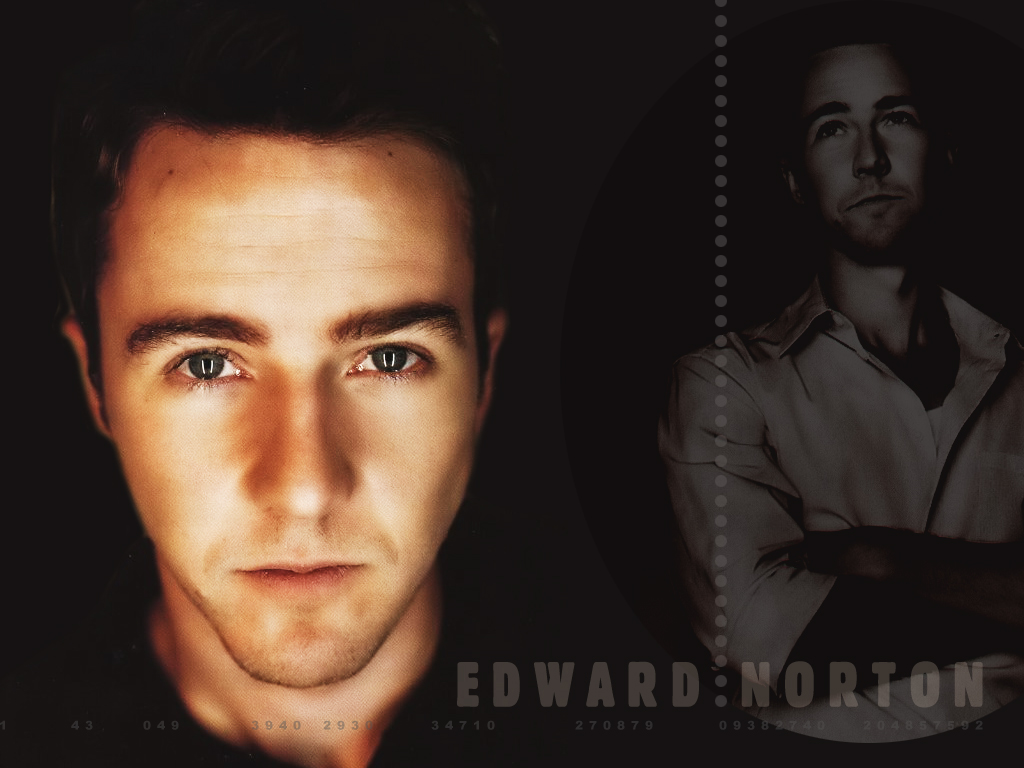
2. Edward Norton
Fight Club, American History X, The Illusionists
All great films
3. Harrison Ford
Indiana Jones, Han Solo. Epic
Tuesday, November 16, 2010
Rosebud.....It's mah sleigh!
1. The different perspectives of Charles Foster Kane presented Kane differently depending on who was telling the story. The newsreel described Kane as someone completely different as Kane's old friend, Leland described him, and his ex-wife had a completely different story to tell.
2. I think that, despite some of Kane's actions, Kane's main motivation was love. He did all the things he did because he wanted to be appreciated and loved. Also, with the revelation at the end, we see that Kane might have also been longing for his childhood, before he was taken away from his parents.
3. I think Kane builds all the monuments and buildings that he does to feel powerful. He likes to be in control, and likes attention, and his creations reflect that.
4. The term "Rosebud" at the end, we learned, refers to Kane's sleigh that he had as a child. This revelation suggests that, at the end of his life, Kane really just wanted his childhood back, he wanted to be back home with his parents, before the banker took him from home, and made him the person he turned out to be.
5. The use of sound in the film was to emphasize the emotion of the scenes. When Kane was talking to his wife in the tent, we hear a woman screaming outside. We never learn what the woman is screaming about, but the sound is used to add to the emotion of the scene, while Kane is arguing with his wife. Also, the scene where his wife is leaving him, a random bird pops into frame, making a screeching noise, and flying away. This also adds to the emotion of the scene.
6. I think Welles is suggesting to us in the film that the media lies to us, telling us what we want to hear.
7. Welles uses the deep focus photography to allow the audience to decide what in the scene to look at. This allows the audience to make their own interpretation of the scene. In the scene where Kane is walking away from the camera, he becomes smaller, less significant, and when he comes closer, he becomes big again, becoming more powerful in the scene.
8. I think Kane collects people because he was taken from his parents when he was young, so he needs to have people around him, he needs to feel accepted and loved.
9. Leland and Kane's friendship basically fell apart. Kane made promises that he couldn't keep (The Declaration of Principals), and Leland finally ends the friendship by sending the ripped up check, declaring that he didn't need Kane, also accusing him of being a hypocrite.
10. I think that Kane was kind of thrown into the situation he was in. He was torn from his home when he was young, he didn't have a choice in the matter, and was basically forced to succeed from then on. His detachment from his parents made him very clingy, but his drive to succeed pushed away everyone he loved. Overall, Kane wasn't a bad person, he was just placed in a bad situation. He made some bad choices, but I think that overall his intentions were good.
2. I think that, despite some of Kane's actions, Kane's main motivation was love. He did all the things he did because he wanted to be appreciated and loved. Also, with the revelation at the end, we see that Kane might have also been longing for his childhood, before he was taken away from his parents.
3. I think Kane builds all the monuments and buildings that he does to feel powerful. He likes to be in control, and likes attention, and his creations reflect that.
4. The term "Rosebud" at the end, we learned, refers to Kane's sleigh that he had as a child. This revelation suggests that, at the end of his life, Kane really just wanted his childhood back, he wanted to be back home with his parents, before the banker took him from home, and made him the person he turned out to be.
5. The use of sound in the film was to emphasize the emotion of the scenes. When Kane was talking to his wife in the tent, we hear a woman screaming outside. We never learn what the woman is screaming about, but the sound is used to add to the emotion of the scene, while Kane is arguing with his wife. Also, the scene where his wife is leaving him, a random bird pops into frame, making a screeching noise, and flying away. This also adds to the emotion of the scene.
6. I think Welles is suggesting to us in the film that the media lies to us, telling us what we want to hear.
7. Welles uses the deep focus photography to allow the audience to decide what in the scene to look at. This allows the audience to make their own interpretation of the scene. In the scene where Kane is walking away from the camera, he becomes smaller, less significant, and when he comes closer, he becomes big again, becoming more powerful in the scene.
8. I think Kane collects people because he was taken from his parents when he was young, so he needs to have people around him, he needs to feel accepted and loved.
9. Leland and Kane's friendship basically fell apart. Kane made promises that he couldn't keep (The Declaration of Principals), and Leland finally ends the friendship by sending the ripped up check, declaring that he didn't need Kane, also accusing him of being a hypocrite.
10. I think that Kane was kind of thrown into the situation he was in. He was torn from his home when he was young, he didn't have a choice in the matter, and was basically forced to succeed from then on. His detachment from his parents made him very clingy, but his drive to succeed pushed away everyone he loved. Overall, Kane wasn't a bad person, he was just placed in a bad situation. He made some bad choices, but I think that overall his intentions were good.
Monday, November 8, 2010
This is what I thought of yo review!
Rylan and Jeff's Project:
Entertainment value: 3
Creativity: 3
Film Knowledge: 3
The movie their Massacre Theater was from Pulp Fiction
Entertainment value: 3
Creativity: 3
Film Knowledge: 3
The movie their Massacre Theater was from Pulp Fiction
Friday, October 29, 2010
A review about a movie about facebook
Roger Ebert's review of The Social Network doesn't really have much of a hook to start out with. Possibly he was lazy on the day he wrote it, but let's give him a break, he had cancer. He does connect Mark Zuckerberg to Bobby Fischer, a chess master, and throughout the article, he makes connections to Fischer. Ebert doesn't really talk about film techniques, more of the story itself. Ebert felt that it was a good film, that we "don't follow the story so much as get dragged along behind it." I saw the movie and thought it was a great film, intriguing and interesting, despite the fact that the movie revolves around people talking.
Monday, October 25, 2010
Casablanca Questions
Casablanca Questions
1. How does the film measure up to your criteria for a good story? What features of successful storytelling does it have or need? How can you account for its enduring popularity?
The story is a classic love triangle, with many conflicts making for an intriguing film. It has character development and plot twists. It’s a very quotable movie. Conflict keeps interest of the viewer.
2. What do you already know about World War II and the political climate of the 1940s? What historical references can you find in the film? What political messages come through?
During WWII, the political climate was explosive. There are references to the Vichy government, concentration camps, and Nazis. The film was trying to get the U.S. to join the war effort.
3. How are different nationalities and ethnic groups represented in the film? Are any groups notably absent? If so, how might their absence be explained?
French and Germans are represented as enemies, African American are represented as minorities. Jews weren’t really present in the film, because they were in concentration camps at the time.
4. When Rick says, “I stick my neck out for nobody,” Captain Renault calls this “a wise foreign policy.” Later Renault tells Rick, “I suspect that, under that cynical shell, youʼre at heart a sentimentalist.” Ilsa accuses Rick of being self-absorbed.” With so much at stake,” she tells him, “all you think of is your own feeling.” Strasser expresses yet another view: “My impression was that he was just another blundering American.” How do you see Rick Blaine? If your judgment changed during the film, explain when it changed and why.
At first, Rick appears to be a self centered jerk, but as the movie progresses, we see that under his hard exterior, he is actually full of compassion for people, and wants to help.
5. When Ilsa arrives at Rickʼs Cafe Americain, she brings the past with her. How much of the past can you reconstruct from references in the film? What do you learn about Rick and Ilsa in Paris and about Rickʼs earlier life? How does this knowledge help to explain what happens in the film?
We find that Rick and Ilsa meet in Paris and fall in love. We find that Ilsa was married when she met Rick, but her husband was in a concentration camp, and she thought he was dead. This intensifies the love triangle.
6. Explore some of the other relationships in Casablanca. What kind of marriage do Ilsa and Laszlo have? How well do Renault and Strasser share the power? What is the basis for Rickʼs association with Renault? Describe the bond between Rick and Sam.
Ilsa and Laszlo have a healthy marriage, which makes Ilsa’s decision even harder.
7. Contemporary viewers often notice the quantities of alcohol and tobacco consumed in the movie. Compare the use of these products on film in the forties to todayʼs films. What accounts for the differences you find?
Today, people are much more aware of the health problems smoking causes, so it’s not as common in movies, and if it is, it’s viewed as a negative thing. Back then, it was just a normal thing for people to do, and not viewed as a problem.
8. At the end of the movie, Rick turns to Renault, saying, “I think this is the beginning of a beautiful friendship.” What do you think he means? What would you expect to see in a sequel to the movie?
It means that Rick lost his love, but he gained a new friend, a sequel would probably follow the progression of their friendship.
1. How does the film measure up to your criteria for a good story? What features of successful storytelling does it have or need? How can you account for its enduring popularity?
The story is a classic love triangle, with many conflicts making for an intriguing film. It has character development and plot twists. It’s a very quotable movie. Conflict keeps interest of the viewer.
2. What do you already know about World War II and the political climate of the 1940s? What historical references can you find in the film? What political messages come through?
During WWII, the political climate was explosive. There are references to the Vichy government, concentration camps, and Nazis. The film was trying to get the U.S. to join the war effort.
3. How are different nationalities and ethnic groups represented in the film? Are any groups notably absent? If so, how might their absence be explained?
French and Germans are represented as enemies, African American are represented as minorities. Jews weren’t really present in the film, because they were in concentration camps at the time.
4. When Rick says, “I stick my neck out for nobody,” Captain Renault calls this “a wise foreign policy.” Later Renault tells Rick, “I suspect that, under that cynical shell, youʼre at heart a sentimentalist.” Ilsa accuses Rick of being self-absorbed.” With so much at stake,” she tells him, “all you think of is your own feeling.” Strasser expresses yet another view: “My impression was that he was just another blundering American.” How do you see Rick Blaine? If your judgment changed during the film, explain when it changed and why.
At first, Rick appears to be a self centered jerk, but as the movie progresses, we see that under his hard exterior, he is actually full of compassion for people, and wants to help.
5. When Ilsa arrives at Rickʼs Cafe Americain, she brings the past with her. How much of the past can you reconstruct from references in the film? What do you learn about Rick and Ilsa in Paris and about Rickʼs earlier life? How does this knowledge help to explain what happens in the film?
We find that Rick and Ilsa meet in Paris and fall in love. We find that Ilsa was married when she met Rick, but her husband was in a concentration camp, and she thought he was dead. This intensifies the love triangle.
6. Explore some of the other relationships in Casablanca. What kind of marriage do Ilsa and Laszlo have? How well do Renault and Strasser share the power? What is the basis for Rickʼs association with Renault? Describe the bond between Rick and Sam.
Ilsa and Laszlo have a healthy marriage, which makes Ilsa’s decision even harder.
7. Contemporary viewers often notice the quantities of alcohol and tobacco consumed in the movie. Compare the use of these products on film in the forties to todayʼs films. What accounts for the differences you find?
Today, people are much more aware of the health problems smoking causes, so it’s not as common in movies, and if it is, it’s viewed as a negative thing. Back then, it was just a normal thing for people to do, and not viewed as a problem.
8. At the end of the movie, Rick turns to Renault, saying, “I think this is the beginning of a beautiful friendship.” What do you think he means? What would you expect to see in a sequel to the movie?
It means that Rick lost his love, but he gained a new friend, a sequel would probably follow the progression of their friendship.
Friday, October 15, 2010
Hollywood is censoring all of our s***t!
The Hays code was a set of censorship guidelines that governed movies made in the United States, also called the Motion Picture Production Code. The Motion Pictures Producers and Distributors Association (MPPDA) began enforcing the code, and wouldn't let movies be played in theaters if they were too explicit, therefore, Hollywood production companies were forced to censor their movies. Today censorship codes have become more relaxed, allowing more to be shown in movies. Films are still rated, but it's not nearly as strict as it used to be.
Monday, October 11, 2010
Another Silent Film Review
1. The Great Train Robbery, Edwin S. Porter, high angle, low angle, long shot.
2. Birth of a Nation, D.W. Griffith, Still camera, lighting, quick editing, cross cutting.
3. Arrival at a Train Station, The Lumiere Brothers, train coming out of screen, long shot
2. Birth of a Nation, D.W. Griffith, Still camera, lighting, quick editing, cross cutting.
3. Arrival at a Train Station, The Lumiere Brothers, train coming out of screen, long shot
Thursday, September 30, 2010
Maria!!! A review of silent movies. (They're movies without sound!)


1. Metropolis, directed by Fritz Lang. This film used Chiaroscuro lighting, which is where a character or object is lighted, and everything else around it is dark. Metropolis also used high angle shots, to make characters look weak, and low angle shots, to make characters appear powerful.
2. The Cabinet of Dr. Caligari, directed by Robert Wiene. This movie used chiaroscuro lighting as well. Crazy set designs defined this film, and the sets tended to reflect the characters moods.
3. A Trip to the Moon, directed by the Lumiere Brothers. This film used lighting, and set designs.
4. The General, directed by Buster Keaton. This film used slapstick comedy, and tracking shots.
5. Modern Times, directed by Charlie Chaplin. This film used slapstick comedy. Charlie Chaplin, who was also the main character in the film did all of his own stunts.
Wednesday, September 29, 2010
This is what I thought of yo project!
James and Raquel's Project
Organization: 3
Creativity: 2
Entertainment: 2
Ideas clearly stated, switches between live explanation and video explanation.
Sofia, Daniel, Naheli, and Albert's Project
Organization: 3
Creativity: 3
Entertainment: 3
Had pictures of actors behind them.
Angelina and Daniel's Project
Organization: 3
Creativity: 3
Entertainment: 2
Used photobooth to edit picture of set from The Cabinet of Dr. Calligari behind her. Same with Trip To The Moon.
Organization: 3
Creativity: 2
Entertainment: 2
Ideas clearly stated, switches between live explanation and video explanation.
Sofia, Daniel, Naheli, and Albert's Project
Organization: 3
Creativity: 3
Entertainment: 3
Had pictures of actors behind them.
Angelina and Daniel's Project
Organization: 3
Creativity: 3
Entertainment: 2
Used photobooth to edit picture of set from The Cabinet of Dr. Calligari behind her. Same with Trip To The Moon.
Tuesday, September 28, 2010
Chaplin Vs. Keaton
One of the major differences between Charlie Chaplin and Buster Keaton's movies is that Chaplin films mostly on sets, while Keaton films on location. In Our Hospitality by Buster Keaton, Keaton films a scene of him floating down a river, and it was filmed on location. Chaplin didn't use scripts, and he sort of made up the movie as he went along. Keaton, however used a script, and his movies were much more structured than Chaplin's. Both Buster and Keaton, however, do all of their own stunts. Keaton filmed a scene in which he was hanging of of a waterfall, and Chaplin did a scene where he was skating blindfolded by a ledge. They both use special effects. Keaton does a really cool special effect where he goes inside of a movie screen and becomes part of the movie.
Subscribe to:
Posts (Atom)