Gangster Characteristics: Guns, gangsters, bank robberies, violence
Film Techniques: Gritty violence, jump cuts, quick editing
Misfits: Bonnie, Clyde, Clyde's brother, they rob banks
Violence: gritty, more realistic violence

Wednesday, May 4, 2011

Tuesday, May 3, 2011
Gangster Paradise
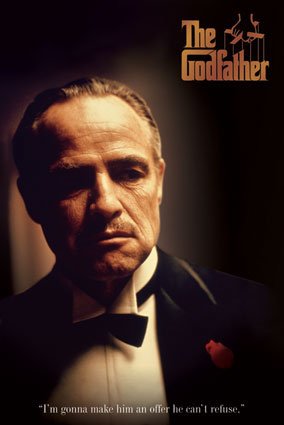
The gangster genre involves crime, usually organized. There are different gangs, a lot of the time families, and those gangs are at war. Gangster films are very violent. Gangster films are different today than they were because the censorship codes are not as strict as they were. Criminals can win, like in Pulp Fiction, and cops can lose, like in Reservoir Dogs.
You can't show that sh*t in yo movies!
Since both sides (good and bad if you can call it that) are criminals, so however the story turns out, a criminal (or criminals) is going to win. The police are kind of suckers, and they're connected to the mob. In terms of sex, there's really nothing (yet ;), so it doesn't break the code in that sense. In terms of violence, it follows the code for the most part. There is violence in the film but not alot of blood is shown.
Friday, April 29, 2011


Monday, April 25, 2011
Film Genre Podcasts
Sci-Fi: Futuristic aspects, CGI, technology
Fantasy: Lord of the Rings (not futuristic setting) Massacre Theater: Lord of the Rings: The Two Towers
Comedy: Makes you laugh, comedies aren't really repetitive. Massacre Theatre: Dude Where's My Car?
Disney Animation: Tangled, Pocahontas, always gorgeous, never satisfied with situation, some sort of struggle, find true love, male characters always chivalrous, sweet, funny, handsome. Massacre Theater: Aladdin
Musicals: Songs, dancing, songs tie the plot together, Singin' in the Rain Massacre Theater: Little Shop of Horrors
Fantasy: Lord of the Rings (not futuristic setting) Massacre Theater: Lord of the Rings: The Two Towers
Comedy: Makes you laugh, comedies aren't really repetitive. Massacre Theatre: Dude Where's My Car?
Disney Animation: Tangled, Pocahontas, always gorgeous, never satisfied with situation, some sort of struggle, find true love, male characters always chivalrous, sweet, funny, handsome. Massacre Theater: Aladdin
Musicals: Songs, dancing, songs tie the plot together, Singin' in the Rain Massacre Theater: Little Shop of Horrors
Tuesday, April 19, 2011
Singin' in the Rain questions
1. The scene where the movie is playing and the sound got out of sync with what was going on on the screen. I think alot of comedy involves things going on that aren't really happening, or ironic contrast.
2. It's showing the transition from silent to talkies. Alot of people didn't like the idea of synchronized sound films and it put many silent film actors out of jobs.
3. I think it's a satire of hollywood, I don't really think it's a parody of anything.
4. I think the songs kind of come out of no where, like alot of times they have nothing to do with the plot, although they are entertaining so I'm not complaining.
5. The scene that set up their relationship was when he told her how he felt about her, and it went along with the performance aspect of the film.
6. I disagree. Across the Universe was a great movie and it came out only a few years ago.
2. It's showing the transition from silent to talkies. Alot of people didn't like the idea of synchronized sound films and it put many silent film actors out of jobs.
3. I think it's a satire of hollywood, I don't really think it's a parody of anything.
4. I think the songs kind of come out of no where, like alot of times they have nothing to do with the plot, although they are entertaining so I'm not complaining.
5. The scene that set up their relationship was when he told her how he felt about her, and it went along with the performance aspect of the film.
6. I disagree. Across the Universe was a great movie and it came out only a few years ago.
Monday, April 18, 2011
A movie about a guy who sings when it's raining
I really enjoyed singing in the rain. The storyline was great, the songs were entertaining and sometimes funny. I will say that sometimes the songs went on for a little too long, but that's probably due to my short attention span. I normally don't really like musicals but I thought this one was a fun movie to watch.
Monday, April 4, 2011


Wednesday, March 23, 2011
Thursday, March 17, 2011
Gettin' Western on yo ass
How it follows the rules:
- Old west
- Shootout
- Indians
- Guns
- Cowboys
- Outlaws
- Saloons
How it breaks the rules:
-
- Old west
- Shootout
- Indians
- Guns
- Cowboys
- Outlaws
- Saloons
How it breaks the rules:
-
Tuesday, March 15, 2011


Tuesday, March 8, 2011
A Big Hollywood World Cinema Orgy
What Hollywood has given world cinema:
- Gangster Movies
- Breathless, took ideas from American Gangster movies
- Super Imposition
What world cinema gave Hollywood:
- Kung Fu movies
- Western films
- Neo Realism in Italian films
- Jump cuts
- Gangster Movies
- Breathless, took ideas from American Gangster movies
- Super Imposition
What world cinema gave Hollywood:
- Kung Fu movies
- Western films
- Neo Realism in Italian films
- Jump cuts
Friday, March 4, 2011
Hong Kong Films!
1. American interest for Kung Fu movies was largely influenced by Bruce Lee, a kung fu instructor from San Francisco.
2. The Shaw Brothers basically wrote the rule book for modern martial arts movies.
3. City on Fire, heist film which some believe was Tarantino's influence for Reservoir Dogs.
4. When the UK gave the control of Hong Kong back to China many directors left in fear of artistic oppression.
5. Jackie Chan differed from the normal Kung Fu stars by mixing action and comedy.
2. The Shaw Brothers basically wrote the rule book for modern martial arts movies.
3. City on Fire, heist film which some believe was Tarantino's influence for Reservoir Dogs.
4. When the UK gave the control of Hong Kong back to China many directors left in fear of artistic oppression.
5. Jackie Chan differed from the normal Kung Fu stars by mixing action and comedy.
Thursday, March 3, 2011
Citizen Kane vs. Rashomon
Both films used flashbacks, but the flashbacks in Citizen Kane told the truth, while the flashbacks in Rashomon lied because it was being told from different, unreliable sources. Both films view the same events from different points of view. Citizen Kane is about one man, but Rashomon is about a situation, yet both films say something about man and humanity.
Monday, February 28, 2011
Movies that f*ck with time!!!!

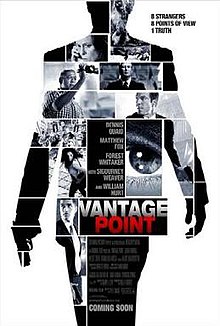


These films are similar in that they all play with time in a certain way. Some show different viewpoints of the same event, while some jump around in time, not showing the events in the usual chronological order.
The films differ, however, in the reason or effect of the time manipulation. Memento uses it to lead up to the twist at the end of the film, which actually happens at the beginning of the sequence of events. Jackie Brown uses it to show different perspectives of the money tradeoff, which builds suspense for the final events.
Thursday, February 17, 2011
Run Lola Run Questions
1. When Lola gets the phone call and we see it from her perspective. The dramatic irony of seing the truth of the affair helps us to identify with Lola's anger. The scenes where she's talking to Manni in bed, break in the action, slow, no sound, red.
2. I would go back to any time when I screwed up and change things so that I didn't screw up.
3. The film supports the claim that love can do anything. The overall theme is that love makes people do crazy things, like rob a bank and run across the city. The bank guard is either lusting after her or he's the kind old man.
4. The clocks emphasize the time restraint placed on Lola. Credit sequence, asks lady for the time, dad's office, Manni looks at the clock before going in, when she gets the call in her apartment.
Glass: 1st story, glass unbroken, 2nd story broken, 3rd story unbroken. Foreshadows her emotions. Glass at the supermarket. When she screams and the glass breaks. Shows her desperation to save the one she loves.
5. Business district, clean and busy, chaos, Lola is looked down upon by older generation. Probably could have happened in a different city, but Lola would have to know the area well.
6. Shows that she's rebellious, doesn't want to fit in. She's the only one wearing bright colors so she stands out more. Rebelling against her parent's generation.
7. In the actions scenes there are tracking shots to show speed. In the hold-up, they use cross-cutting
2. I would go back to any time when I screwed up and change things so that I didn't screw up.
3. The film supports the claim that love can do anything. The overall theme is that love makes people do crazy things, like rob a bank and run across the city. The bank guard is either lusting after her or he's the kind old man.
4. The clocks emphasize the time restraint placed on Lola. Credit sequence, asks lady for the time, dad's office, Manni looks at the clock before going in, when she gets the call in her apartment.
Glass: 1st story, glass unbroken, 2nd story broken, 3rd story unbroken. Foreshadows her emotions. Glass at the supermarket. When she screams and the glass breaks. Shows her desperation to save the one she loves.
5. Business district, clean and busy, chaos, Lola is looked down upon by older generation. Probably could have happened in a different city, but Lola would have to know the area well.
6. Shows that she's rebellious, doesn't want to fit in. She's the only one wearing bright colors so she stands out more. Rebelling against her parent's generation.
7. In the actions scenes there are tracking shots to show speed. In the hold-up, they use cross-cutting
Wednesday, February 9, 2011
Amelie
I really enjoyed this film. It was interesting and different in a way that I haven't seen any American films be different. I loved how they used exaggerations to convey the character's feelings, and I liked how they used the narrator, because he told the story without being too obtrusive. I liked how they used humor, while still maintaining a serious theme throughout the film. Overall I think I would give this film a 4/5, it was a fun film to watch. It also adds further evidence to my theory that all that French people do is smoke and have sex.
Monday, February 7, 2011
This is mah shit
Activity 12:
If I were to direct a short film I would definitely use jump cuts as used in French New Wave films such as Jean-Luc Godard's Breathless. First of all, French films are sweet. French people aren't all weird about sex and showing skin in their films like American's are. Any film I make would use some of the techniques of French films simply for the reason that I like French films. But for stylistic purposes I think it's a good idea. It's straying away from the use of clean editing that is used in many Hollywood films today, and gives a more gritty, real feel to the film. I would definitely use jump cuts in conversations, if only for the purpose of keeping the audience from falling asleep while the conversation is taking place. The jump will hopefully jar them back to the film they are watching. I would also use jump cuts in action scenes to speed up the scenes and to add suspense.
Activity 13:
Because jump cuts are so commonly used today, I think people have been jaded to them, and they are no longer as effective as they were during the French New Wave movement. The use of the jump cuts in French cinema was to jar the audience from the film, reminding them that it was a film and that the events weren't actually happening. The users of this technique were making a statement against consumerism. Ironically, jump cuts are commonly used in commercials today. While French director's used jump cuts to jar the audience, modern commercials use it to suck the viewer in, to show them their product in quick flashes that manipulates the viewer.
Activity 14:
Memento (2000)
Christopher Nolan
United States
The film follows Leonard Shelby who suffers from short term memory loss. The film chronicles Leonard searching for the man who killed his wife, while the events are shown backwards, revealing information piece by piece. Leonard writes notes and takes pictures to remind himself of things. I really enjoyed this film, and liked the use of the hand-held camera. It worked because of the nature of the plot, and also probably because of the unstableness of the protagonist. The jerky camera definitely added to the realism of the film, and I think Nolan did a good job of not overusing it. As a whole I thought the movie was great. It had an interesting plot line with plenty of twists, and the showing-the-events backwards component was an excellent addition. It makes the viewer think about the events, without them being spoon-fed to them. No other film I've seen was quite like this one, and I can easily say that this was one of Nolan's best films.
If I were to direct a short film I would definitely use jump cuts as used in French New Wave films such as Jean-Luc Godard's Breathless. First of all, French films are sweet. French people aren't all weird about sex and showing skin in their films like American's are. Any film I make would use some of the techniques of French films simply for the reason that I like French films. But for stylistic purposes I think it's a good idea. It's straying away from the use of clean editing that is used in many Hollywood films today, and gives a more gritty, real feel to the film. I would definitely use jump cuts in conversations, if only for the purpose of keeping the audience from falling asleep while the conversation is taking place. The jump will hopefully jar them back to the film they are watching. I would also use jump cuts in action scenes to speed up the scenes and to add suspense.
Activity 13:
Because jump cuts are so commonly used today, I think people have been jaded to them, and they are no longer as effective as they were during the French New Wave movement. The use of the jump cuts in French cinema was to jar the audience from the film, reminding them that it was a film and that the events weren't actually happening. The users of this technique were making a statement against consumerism. Ironically, jump cuts are commonly used in commercials today. While French director's used jump cuts to jar the audience, modern commercials use it to suck the viewer in, to show them their product in quick flashes that manipulates the viewer.
Activity 14:
Memento (2000)
Christopher Nolan
United States
The film follows Leonard Shelby who suffers from short term memory loss. The film chronicles Leonard searching for the man who killed his wife, while the events are shown backwards, revealing information piece by piece. Leonard writes notes and takes pictures to remind himself of things. I really enjoyed this film, and liked the use of the hand-held camera. It worked because of the nature of the plot, and also probably because of the unstableness of the protagonist. The jerky camera definitely added to the realism of the film, and I think Nolan did a good job of not overusing it. As a whole I thought the movie was great. It had an interesting plot line with plenty of twists, and the showing-the-events backwards component was an excellent addition. It makes the viewer think about the events, without them being spoon-fed to them. No other film I've seen was quite like this one, and I can easily say that this was one of Nolan's best films.
Friday, February 4, 2011
Film Festival
Long Films:
Bad Behavior
The Ceremony
The Snow Caveman
The Dead
Poligamy
Short Films:
Hangnail
Tapeworm
The Dive
No Robots
Red Snow
Bad Behavior
The Ceremony
The Snow Caveman
The Dead
Poligamy
Short Films:
Hangnail
Tapeworm
The Dive
No Robots
Red Snow
Monday, January 31, 2011
Directors
George Lucas (Special effects, costumes, serial movies)
Christopher Nolan (Leo, intense scenes, crazy characters)
Martin Scorsese (Gangster, music videos, music)
Tim Burton (Stop-motion, creepy)
Jon Favreau (Cameo,
Steven Spielberg (action, fantasy, suspense)
Quentin Tarantino (Samurai swords, long conversations, references to pop culture, in some of his own movies)
David Lynch
Coen Brothers (Writer-directors, twists and turns, violence)
Clint Eastwood (Westerns)
John Lasseter (Animation)
Bret Ratner (Chris Tucker, Jackie Chan, comedy/action genre)
Tarantino:
Fast-paced, violent, animation, split-screen, music
Wes Anderson:
Suspenseful, sound effects, reverse, text
Jean-Luc Godard:
Twangy music, happy, hopeful, slow motion,
Werner Herzog:
Old style of editing, music,
David Lynch:
Narration,
Christopher Nolan (Leo, intense scenes, crazy characters)
Martin Scorsese (Gangster, music videos, music)
Tim Burton (Stop-motion, creepy)
Jon Favreau (Cameo,
Steven Spielberg (action, fantasy, suspense)
Quentin Tarantino (Samurai swords, long conversations, references to pop culture, in some of his own movies)
David Lynch
Coen Brothers (Writer-directors, twists and turns, violence)
Clint Eastwood (Westerns)
John Lasseter (Animation)
Bret Ratner (Chris Tucker, Jackie Chan, comedy/action genre)
Tarantino:
Fast-paced, violent, animation, split-screen, music
Wes Anderson:
Suspenseful, sound effects, reverse, text
Jean-Luc Godard:
Twangy music, happy, hopeful, slow motion,
Werner Herzog:
Old style of editing, music,
David Lynch:
Narration,
Favorite Directors

George Lucas

David Fincher

Quentin Tarantino
I think Fincher was influenced for Fight Club partly by some of the film noir movies, since there are many film noir elements in Fight Club.
Although we haven't seen any of his films, Tarantino's favorite director is Jean-Luc Godard, and Tarantino's films were influenced by him.
Friday, January 28, 2011
The 400 Blows (Remake!)
If I were to remake The 400 Blows today:
Director: David Fincher, because Fincher's use of camera angles and music in his films would make for an interesting remake.
Antoine: Honestly, none of the young male Hollywood actors today would be fitting for the role, so I would probably look for an obscure young actor who would be better for the role.
His mother: Angelina Jolie, because Antoine's mother in the original kind of reminded me of her.
HIs father: Kevin Spacey, I'm not really sure about this one actually, maybe because of his role in American Beauty, but he seems like he would be good for the role.
Director: David Fincher, because Fincher's use of camera angles and music in his films would make for an interesting remake.
Antoine: Honestly, none of the young male Hollywood actors today would be fitting for the role, so I would probably look for an obscure young actor who would be better for the role.
His mother: Angelina Jolie, because Antoine's mother in the original kind of reminded me of her.
HIs father: Kevin Spacey, I'm not really sure about this one actually, maybe because of his role in American Beauty, but he seems like he would be good for the role.
Tuesday, January 25, 2011
The 400 Blows
Homage:
-Paris Belongs to Us
-Balzac
-Advertisements for other movies
Autobiographical:
-The film is from the directors life story
- He was a troublemaker
-Went to Juvenile detention
Mise en scene:
-Kids ditching the PE coach while he's running
=Antoine on the floor, Rene on the bed, his dad standing
Low Budget:
-People on street aren't extras, they're real people who don't know they're being filmed
-Paris Belongs to Us
-Balzac
-Advertisements for other movies
Autobiographical:
-The film is from the directors life story
- He was a troublemaker
-Went to Juvenile detention
Mise en scene:
-Kids ditching the PE coach while he's running
=Antoine on the floor, Rene on the bed, his dad standing
Low Budget:
-People on street aren't extras, they're real people who don't know they're being filmed
Cinema in countries other than the one we live in.....or something... (Part 2)
Spain:
1. Creative and technical excelence
2. History and culture with bullfighting and the working class.
3. Penelope Cruz
Brazil:
1. Brazilian culture such as violence
2. City of God, 2 children growing up in violent neighborhood.
3. Film movement called the Novo Movement
1. Creative and technical excelence
2. History and culture with bullfighting and the working class.
3. Penelope Cruz
Brazil:
1. Brazilian culture such as violence
2. City of God, 2 children growing up in violent neighborhood.
3. Film movement called the Novo Movement
Monday, January 24, 2011
Cinema in countries other than the one we live in.....or something...
Australia:
1. Waffle = Talking Nonsense
2. Nichole Kidman
3. Peter Jackson
Japan:
1. Samurais and warriors
2. Geisha, prostitutes, pale cuz they thought it was beautiful
3. Pink film era, films were very sexual. Controversial films.
China:
1. Crows and Sparrows
2. Victory of the Chinese People
3. Jin Xie was controversial, Two Stage Sisters: Anti-Capitalism and Pro-Feminism
Italy:
1. Lumiere Brothers made camera
2. Creativity came from Renaissance
3. Mussolini had his own film studio
1. Waffle = Talking Nonsense
2. Nichole Kidman
3. Peter Jackson
Japan:
1. Samurais and warriors
2. Geisha, prostitutes, pale cuz they thought it was beautiful
3. Pink film era, films were very sexual. Controversial films.
China:
1. Crows and Sparrows
2. Victory of the Chinese People
3. Jin Xie was controversial, Two Stage Sisters: Anti-Capitalism and Pro-Feminism
Italy:
1. Lumiere Brothers made camera
2. Creativity came from Renaissance
3. Mussolini had his own film studio
Thursday, January 20, 2011
Dear Roger Ebert
Having only seen 8 1/2 once, I can't really say if it's a good film or not. Your review, however, made me want to re-watch it, just to see if I like it better the second time. I liked how the film switched in and out of reality, and would be interested in seeing more films with a similar concept. Your review gave me a better understanding of the film, and provided clarification for some of the things I didn't really understand. Anyways, I will try to re-watch this movie some time soon, and I'll get back to you about what I thought of it. In the meantime, would you be so kind as to suggest some films with a similar concept, that would be much appreciated.
Thanks!
Dillon
Thanks!
Dillon
Iran!
1. They don't actually hate Americans
2. They don't use urinals, sit down to pee
3. Modesty is important, women's faces are the only thing shown so they get alot of plastic surgery.
2. They don't use urinals, sit down to pee
3. Modesty is important, women's faces are the only thing shown so they get alot of plastic surgery.
Wednesday, January 19, 2011
8 1/2
This film was definitely very interesting. I was also a very strange film, much of it being in the main character, Guido's mind. I thought the scene in the house was particularly interesting, as it was showing what would happen if all the women in his life were together under one roof, it was also very entertaining when he pulled out a whip and went all Indiana Jones on their asses. Honestly much of this movie I didn't really understand. I get that it was showing Guido's relationship with all the women in his life, while he was trying to think of ideas for his screenplay, but to me the film was very unorganized and hectic. Maybe that's what the director was going for. I also didn't really understand the final scene, when everybody was dancing around Guido, wearing weird costumes. Not really sure what they were going for there, but it was strange. I am interested in seeing the American version of this movie, Nine, to see the similarities and differences, and maybe to get a better understanding of the story.
Tuesday, January 4, 2011
Italy!
-The Mafia
-Good Food (Italians love to eat)
-Mussolini
-Pasta
-They talk with their hands
-Cemetery Man
-The Good the Bad, and the Ugly
-Al Pacino
-Danny Devito
-Martin Scorcese
-Robert DeNiro
-
-Good Food (Italians love to eat)
-Mussolini
-Pasta
-They talk with their hands
-Cemetery Man
-The Good the Bad, and the Ugly
-Al Pacino
-Danny Devito
-Martin Scorcese
-Robert DeNiro
-
Subscribe to:
Posts (Atom)