1. Close-up, high key lighting
2. High angle
3. Panning
4. Tracking shot
5. Crane shot
6. Long shot
7. Bottom lighting
8. Rear lighting
9. Super Imposition
10. Eye-line match

Friday, December 10, 2010

Wednesday, December 8, 2010
Double Indemnity review of the review
Adam:
Loved the film. Even though it's about money, there's so much more to it. Walter's chance at greatness.
Sam:
Disappointed with the film. First half un-suspenseful. Main characters have no chemistry. Love story is really between Walter and Keyes.
I agree with:
Loved the film. Even though it's about money, there's so much more to it. Walter's chance at greatness.
Sam:
Disappointed with the film. First half un-suspenseful. Main characters have no chemistry. Love story is really between Walter and Keyes.
I agree with:
Tuesday, December 7, 2010
Double the fun, double the indemnity!
file://localhost/Users/student/Documents/Double%20indemnity%202/Launcher.html
Monday, December 6, 2010
Dillon and Sebastian: A hardboiled dialogue
Dillon: Hey man, did you bring me the cabbage? I'm on the nut right now.
Sebastian: I was going to, but my heap broke down.
Dillon: That sucks, well we can spit about the spinach while we smell from the barrel.
Sebastian: I can't right now, the guy down the street was squirting metal at the snitch, so now I gotta cheese the stiff.
Sebastian: I was going to, but my heap broke down.
Dillon: That sucks, well we can spit about the spinach while we smell from the barrel.
Sebastian: I can't right now, the guy down the street was squirting metal at the snitch, so now I gotta cheese the stiff.
Wednesday, November 17, 2010
My favorite actors.....or whatever

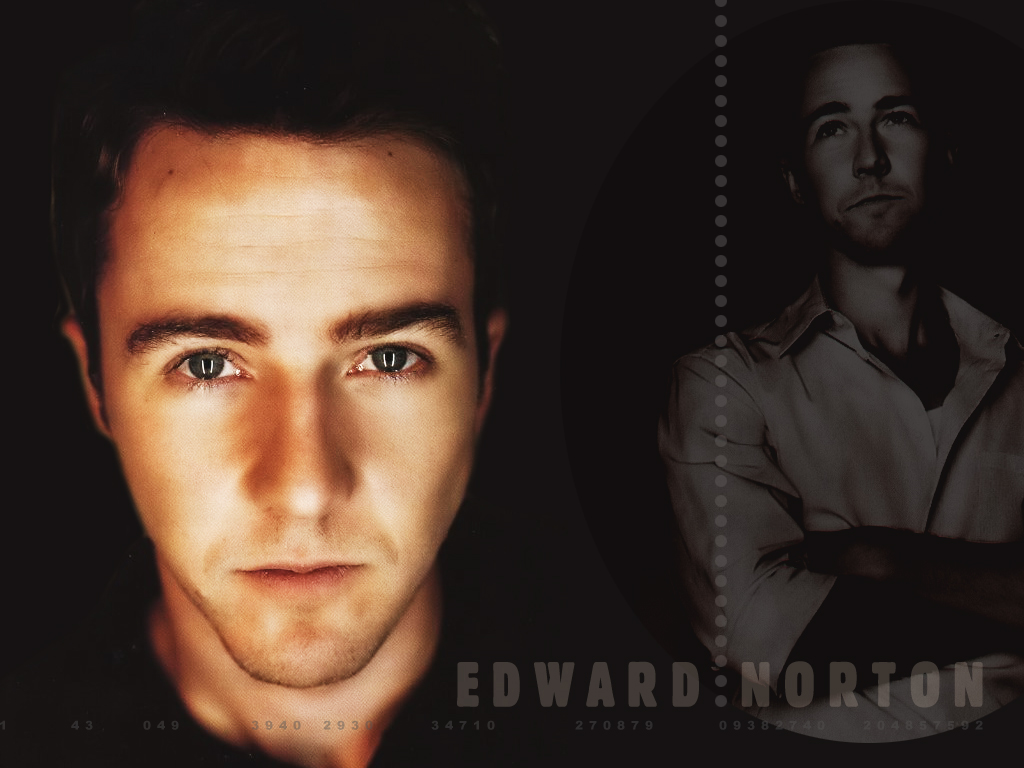
1. Brad Pitt
Just cuz he's bad ass in Fight Club and Ocean's 11

2. Edward Norton
Fight Club, American History X, The Illusionists
All great films
3. Harrison Ford
Indiana Jones, Han Solo. Epic
Tuesday, November 16, 2010
Rosebud.....It's mah sleigh!
1. The different perspectives of Charles Foster Kane presented Kane differently depending on who was telling the story. The newsreel described Kane as someone completely different as Kane's old friend, Leland described him, and his ex-wife had a completely different story to tell.
2. I think that, despite some of Kane's actions, Kane's main motivation was love. He did all the things he did because he wanted to be appreciated and loved. Also, with the revelation at the end, we see that Kane might have also been longing for his childhood, before he was taken away from his parents.
3. I think Kane builds all the monuments and buildings that he does to feel powerful. He likes to be in control, and likes attention, and his creations reflect that.
4. The term "Rosebud" at the end, we learned, refers to Kane's sleigh that he had as a child. This revelation suggests that, at the end of his life, Kane really just wanted his childhood back, he wanted to be back home with his parents, before the banker took him from home, and made him the person he turned out to be.
5. The use of sound in the film was to emphasize the emotion of the scenes. When Kane was talking to his wife in the tent, we hear a woman screaming outside. We never learn what the woman is screaming about, but the sound is used to add to the emotion of the scene, while Kane is arguing with his wife. Also, the scene where his wife is leaving him, a random bird pops into frame, making a screeching noise, and flying away. This also adds to the emotion of the scene.
6. I think Welles is suggesting to us in the film that the media lies to us, telling us what we want to hear.
7. Welles uses the deep focus photography to allow the audience to decide what in the scene to look at. This allows the audience to make their own interpretation of the scene. In the scene where Kane is walking away from the camera, he becomes smaller, less significant, and when he comes closer, he becomes big again, becoming more powerful in the scene.
8. I think Kane collects people because he was taken from his parents when he was young, so he needs to have people around him, he needs to feel accepted and loved.
9. Leland and Kane's friendship basically fell apart. Kane made promises that he couldn't keep (The Declaration of Principals), and Leland finally ends the friendship by sending the ripped up check, declaring that he didn't need Kane, also accusing him of being a hypocrite.
10. I think that Kane was kind of thrown into the situation he was in. He was torn from his home when he was young, he didn't have a choice in the matter, and was basically forced to succeed from then on. His detachment from his parents made him very clingy, but his drive to succeed pushed away everyone he loved. Overall, Kane wasn't a bad person, he was just placed in a bad situation. He made some bad choices, but I think that overall his intentions were good.
Monday, November 8, 2010
This is what I thought of yo review!
Rylan and Jeff's Project:
Entertainment value: 3
Creativity: 3
Film Knowledge: 3
The movie their Massacre Theater was from Pulp Fiction
Entertainment value: 3
Creativity: 3
Film Knowledge: 3
The movie their Massacre Theater was from Pulp Fiction
Subscribe to:
Posts (Atom)